

Community Scope: This community is dedicated to the textile, fabric and apparel industry. Please do not post content unrelated to textiles or apparel.
Textile Alliance Global Hub

Ask · Share · Source · Solve

Make your needs visible, help your products get discovered, and connect with the right people faster.

Latest Page 1 of 1
🔝
Knowledge2w ago

Do you really know what “PFAS-free” means in textiles?
I’ve seen many mills, dyehouses and finishing factories say, “We are PFAS-free” or “Our machines are PFAS-free.”
But when you ask for a test report, very often they cannot provide one.
PFAS stands for per- and polyfluoroalkyl substances, a large group of fluorinated chemicals historically used in textiles for water, oil and stain repellency. The problem is that many PFAS are highly persistent and can remain in the environment for a very long time.
In textile production, PFAS may come from legacy finishes, shared equipment, auxiliaries, raw materials or cross-contamination.
That is why I don’t think it is responsible to simply claim a factory is “100% PFAS-free.”
A better approach is to talk about actual test results and applicable limits.
For example, instead of saying “PFAS-free,” I prefer wording such as:
“The tested PFAS substances are below the specified limit according to the relevant test method.”
The key questions should always be: Which PFAS were tested? Which method was used? What is the detection limit?
A laboratory report is more meaningful than a marketing claim.

MessageLike3Save1Repost0Share
Knowledge1w ago

Water Repellency, Hydrostatic Head, and Breathability — What’s the Difference?
These terms are often confused, but they describe different fabric properties.
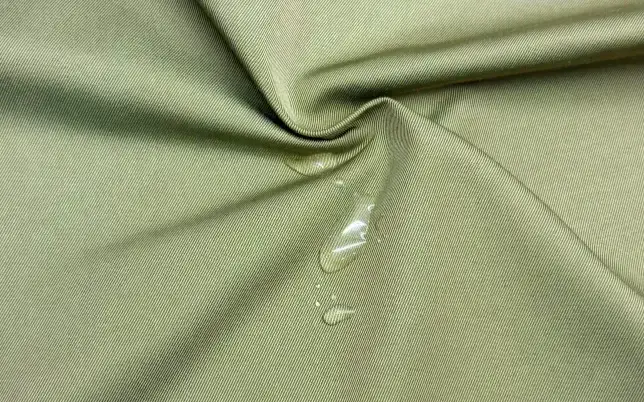
Water repellency refers to the fabric surface. A DWR or other repellent finish helps water bead up and roll off, similar to a lotus leaf. Some textiles also combine water, oil, and stain repellency.
Hydrostatic head measures how much water pressure a fabric can resist before leakage occurs. This is usually achieved through a PU coating, TPU membrane, or laminated construction. Outdoor shell fabrics commonly target around 10,000–25,000 mmH₂O, depending on the end use.
Breathability in waterproof fabrics usually means moisture vapor transmission, not simple air permeability. A common MVTR target may be around 10,000–15,000 g/m²/24h, depending on the membrane and test method.
Simply put:
Water repellency = water beads off the surface
Hydrostatic head = resistance to water pressure
MVTR = moisture vapor can escape
A good outdoor fabric needs the right balance of all three.

View on YouTube
Invited to answer
MessageLike2Save1Repost0Share
Knowledge2w ago

为什么会有 A、B、C 样颜色呢?
通常我们在收到客人颜色后,会根据客人的要求在实验室里制作颜色样。
一般我们会在一开始根据客供颜色,找到实验室里最相似的颜色。再在这个颜色上做出微调,逐步接近。
当主色在客人颜色范围后,我们再调整色光,也就是我们说的例如海军蓝颜色上稍微偏红一点(看上去颜色会有偏“旧”的有感觉),或者稍微片蓝一点(看上去会偏艳丽一些,颜色更“沉稳”)。
当我们使用 D65(仿北光)来对色(这里不得不提一下,有些客人可能要起 TL84 光源,也有自然光)。我们会找出三个方向最像客人的颜色,制作成 A、B、C 来给客人确认。那么有些客人可能遇到明明不像,为什么供应商会说像呢。这里也就是说大家使用的光源不同,或者角度不同都会带来一些差异。
另外还有一个大货在生产后于颜色 L/D不同,因为有些大货是要求防水,而 A、B、C 颜色样可能没有添加防水。那么大货添加防水后会整体偏红光。

MessageLike4Save2Repost0Share
Knowledge2w ago

Woven Fabric Supply and Custom Development for Apparel
CC Textile supplies performance, stretch, nylon-cotton, polyester-cotton, yarn-dyed, jacquard and lining fabrics for apparel programmes.

We also support custom fabric development from reference samples, specifications and garment concepts. Construction, colour, hand feel and finishing can be reviewed around the intended use and approval requirements.

Bring us your fabric idea. We work with you to turn it into an approvable sample and a practical route to bulk production.

View on YouTube
Invited to answer
MessageLike6Save5Repost0Share
Knowledge2w ago

What is PU coating, and what does it do?
PU coating, short for polyurethane coating, is applied to the surface of a fabric and then rapidly dried. The resulting fabric can effectively resist water penetration and provide wind resistance. It can also give the fabric more body and create a smoother, flatter surface.
The hand feel is not soft, but more skin-like. It is suitable for trench coats, padded jackets, shell jackets and other jackets.
The hydrostatic head can reach 1,000–15,000 mmH₂O.

Invited to answer
MessageLike4Save0Repost0Share
Textile Alliance provides information and communication tools only. Transactions are conducted independently between users. The platform does not guarantee payment, delivery, product quality or transaction performance.