

FollowFollowers: 3
Quero tecidos pra fazer roupas de academia
Quero tecidos pra fazer roupas de academia
Comments 0
Sign in to comment
Make your needs visible, help your products get discovered, and connect with the right people faster.
Quero tecidos pra fazer roupas de academia
Quero tecidos pra fazer roupas de academia
 Sponsored

Performance Fabric、Stretch Fabric 、Yarn-dyed Jacquard Fabric

PC zee fabric.
60" inch width
60% cotton+ 40% polyester.
GSM. 220.
Qty require. 2000 MTR.
100% polyester Trinda fabric.
Qty require. 2000 kg as follows.
Black. 50%
Grey. 25%
Blue. 15%
Hi-viz. 10% If you can provide the above material then I will dispatch you their samples
Our latest handmade catalogue

Do you have Polyester Viscose and Spandex blend fabric available t's twill fabric

Eu busco o Dryfit para camisas e o poliamida liso para legging e top.
Eu busco o Dryfit para camisas e o poliamida liso para legging e top.
Preciso de brim poli tuil cinza
Poliester e algodao
Vc tem representante em sao paulo
Preciso de brim poli tuil cinza
Poliester e algodao
Vc tem representante em sao paulo

I have an enquiry for a short , they want cotton / nylon Taslon with soft peach. I am told this is not possible as cannot peach Taslon, so I am wondering if cotton nylon with a peach is possible . It is only a small qty. So probably need stock.
Ciao, scrivo dalla azienda di abbigliamento da lavoro, cerchiamo un tessuto 100% microfibra di poliestere idrorepellente . E' possibile avere una campionatura dei vostri tessuti?
Ciao, scrivo dalla azienda di abbigliamento da lavoro, cerchiamo un tessuto 100% microfibra di poliestere idrorepellente . E' possibile avere una campionatura dei vostri tessuti?
Eu busco o Dryfit para camisas e o poliamida liso para legging e top.
Eu busco o Dryfit para camisas e o poliamida liso para legging e top.
Water Repellency, Hydrostatic Head, and Breathability — What’s the Difference?
These terms are often confused, but they describe different fabric properties.
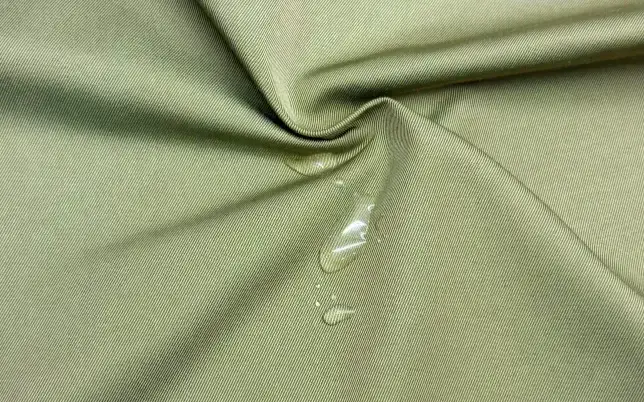
Water repellency refers to the fabric surface. A DWR or other repellent finish helps water bead up and roll off, similar to a lotus leaf. Some textiles also combine water, oil, and stain repellency.
Hydrostatic head measures how much water pressure a fabric can resist before leakage occurs. This is usually achieved through a PU coating, TPU membrane, or laminated construction. Outdoor shell fabrics commonly target around 10,000–25,000 mmH₂O, depending on the end use.
Breathability in waterproof fabrics usually means moisture vapor transmission, not simple air permeability. A common MVTR target may be around 10,000–15,000 g/m²/24h, depending on the membrane and test method.
Simply put:
Water repellency = water beads off the surface
Hydrostatic head = resistance to water pressure
MVTR = moisture vapor can escape
A good outdoor fabric needs the right balance of all three.